With energy prices continuing to fluctuate in 2026, every homeowner is looking for ways to trim their monthly expenses. In the kitchen—one of the most energy-intensive rooms in the house—the debate usually centers on your stove. Specifically, when looking at induction vs electric cooktop energy savings, which technology actually puts more money back in your pocket?
As a tech-driven home cook in Austin, I’ve tracked the kilowatt-hour (kWh) usage of both systems in my test kitchen. While both use electricity as their power source, the way they transfer heat is fundamentally different.
In this guide, I will break down the science, the speed, and the bottom-line costs of induction vs electric cooktop energy savings to help you make the smartest choice for your home and your wallet.
Table of Contents
The Science of Efficiency: How They Compare
To understand induction vs electric cooktop energy savings, we first have to look at “Heat Waste.”
Traditional Electric Cooktops (The Radiant Method)
Standard electric stoves work by heating a metal coil (either exposed or under glass). That coil heats the glass, which then heats the air around the pot, and finally, the pot itself.
- Energy Loss: Roughly 30% to 35% of the energy used is wasted. It escapes into the kitchen air (which then forces your AC to work harder—another hidden cost!).
- Efficiency Rating: 65% – 70%.
Induction Cooktops (The Magnetic Method)
Induction uses electromagnetic copper coils. These coils create a magnetic field that vibrates the molecules of your cookware, turning the pot itself into the heating element.
- Energy Loss: Only 10% to 15% of the energy is lost. Because the glass surface never gets hot (unless the pot is on it), almost all the power goes directly into the food.
- Efficiency Rating: 85% – 90%.
Induction vs Electric Cooktop Energy Savings: The Bill Breakdown
When we talk about induction vs electric cooktop energy savings, we have to look at the “Time-to-Boil” factor. Since induction is nearly twice as fast as electric, the “On-Time” of your appliance is significantly reduced.
Monthly Cost Projections (2026 Estimates)
Based on average US energy costs of $0.18 per kWh and 1 hour of daily cooking:
- Standard Electric: ~$18.50 per month.
- Induction: ~$12.00 per month.
- The Difference: Over the course of a year, switching to induction can save you roughly $75 to $100 on your direct cooking costs.
The “Hidden” Savings: Cooling Costs
In a hot climate like Texas, a standard electric stove acts like a space heater. In 2026, smart home data shows that families who switch to induction see a secondary drop in their HVAC energy usage. Because induction doesn’t heat the air, your air conditioner doesn’t have to fight the stove to keep the kitchen cool.
Performance Comparison: Speed and Precision
Efficiency isn’t just about money; it’s about your time—the ultimate “Efficient Cuisine” metric.
- Boil Time: A portable induction burner can boil a quart of water in roughly 90 seconds. A standard electric burner takes 5 to 8 minutes.
- Instant Control: Induction reacts instantly to a temperature change. If a pot is about to boil over, you turn it down, and the heat stops immediately. An electric burner has “thermal lag,” staying hot for minutes after you turn it off.
- Safety: Because the surface stays cool to the touch, induction is the safest choice for homes with children or pets.
The “Hidden” Cost: Induction-Ready Cookware
The only “catch” in the induction vs electric cooktop energy savings debate is that induction requires magnetic cookware (cast iron or magnetic stainless steel).
The Magnet Test: Take a magnet from your fridge. If it sticks to the bottom of your pan, it’s induction-ready. If it doesn’t, you’ll need to invest in a new set. However, as I noted in my 10 Space-Saving Kitchen Gadgets guide, many modern nesting sets are now induction-compatible by default.
Summary Table: Induction vs Electric (2026)
| Feature | Standard Electric | Induction Cooktop |
|---|---|---|
| Energy Efficiency | ~70% | ~90% |
| Boil Speed (1qt Water) | 6-8 Minutes | 90 Seconds |
| Kitchen Heat Gain | High | Minimal |
| Surface Safety | Stays Hot | Cool to Touch |
| Monthly Cost | $$$ | $ |
Sarah’s Verdict: Is Induction Worth It?
If you are looking for the maximum induction vs electric cooktop energy savings, the answer is a resounding YES. While the initial cost of an induction unit (or a portable burner) might be slightly higher than a traditional electric one, the combination of lower energy bills, faster cooking times, and a cooler kitchen makes it the clear winner for 2026.
For those not ready for a full kitchen remodel, I highly recommend starting with a portable induction burner. It’s a low-cost way to experience the speed and efficiency for yourself.
Shop the Induction Revolution: Sarah’s Top Pick
Ready to lower your bill and speed up your kitchen? Here are the induction tools I use:
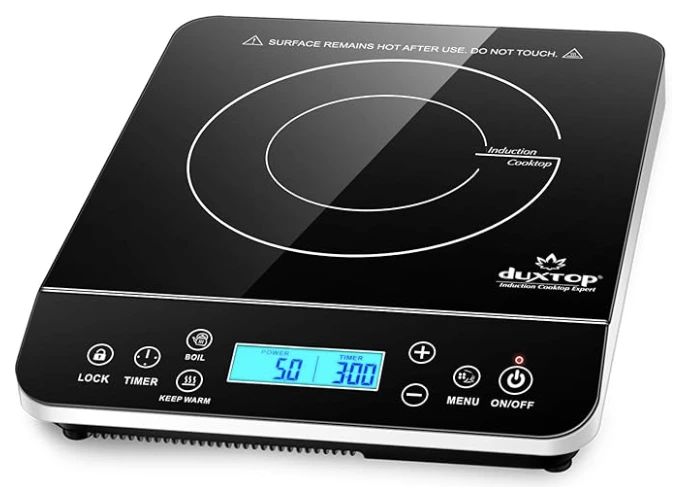
1. The Best Portable Induction Burner: Duxtop 9600LS
If you’re a renter or just want to test the technology, this is the gold standard. It features 20 different power levels and a digital timer. It’s perfect for adding an extra “burner” to your 1-Hour Meal Prep System.
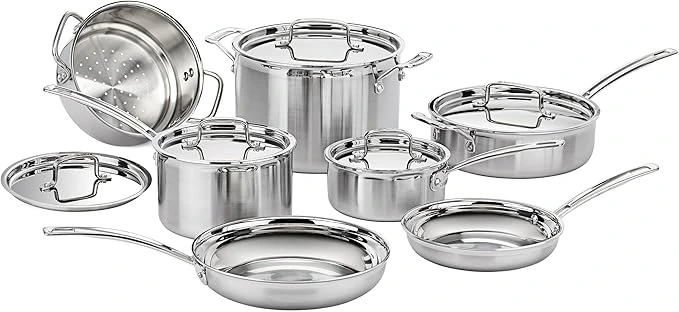
2. The Professional Induction Cookware Set: Cuisinart MultiClad Pro
To get the most induction vs electric cooktop energy savings, you need high-quality pans. This stainless steel set has a triple-ply construction that ensures the magnetic field is distributed perfectly for even cooking.
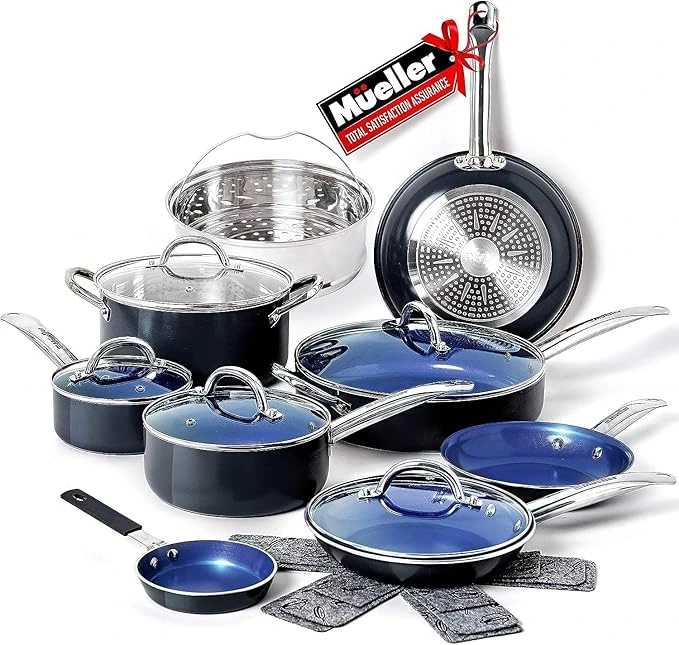
3. The Budget-Friendly Induction Set: Mueller UltraClad
If you are just starting your efficient kitchen journey, this set offers incredible performance for the price. It’s durable, dishwasher safe, and fully induction-compatible.