The food processor vs blender debate is one of the most common kitchen appliance questions I receive from readers across the United States, and it is completely understandable why. Both appliances sit on your countertop, both have sharp rotating blades, both process food — and yet they are fundamentally different tools designed for fundamentally different tasks. Buying the wrong one for your cooking style is a frustrating and expensive mistake that leaves you with a powerful appliance you barely use.
As a kitchen efficiency expert based in Austin, Texas, I own and regularly use both a food processor and a blender in my kitchen — and I can tell you with complete confidence that these two appliances are not interchangeable. Each one excels at tasks the other handles poorly or cannot perform at all. Understanding the food processor vs blender distinction before you spend your money is the single most important appliance purchasing decision a new home cook can make.
Here is my complete, practical guide to the food processor vs blender question, covering every common cooking task, every key difference, and exactly which appliance — or combination of appliances — your specific kitchen needs in 2026.
Table of Contents
The Fundamental Difference Between a Food Processor and a Blender
Before we dive into the food processor vs blender task-by-task comparison, it is essential to understand the fundamental engineering difference between these two appliances — because this difference explains everything about why each one excels at different tasks.
The Blender: Designed for Liquids
A blender is engineered around a tall, narrow jar with a vortex-creating blade assembly at the bottom. When the blender runs, it creates a powerful downward vortex that pulls ingredients from the top of the jar down toward the blade and then pushes them back up the sides in a continuous circular motion. This vortex action requires liquid to function — without sufficient liquid, the vortex cannot form, ingredients sit above the blade without making contact, and the blender produces uneven, inconsistent results.
The Food Processor: Designed for Solids
A food processor is engineered around a wide, shallow bowl with an S-shaped blade that rotates horizontally through the ingredients. Unlike a blender’s vortex, a food processor’s blade physically contacts and cuts ingredients on every rotation regardless of whether liquid is present. This design allows a food processor to process dry, semi-dry, and solid ingredients that a blender cannot handle effectively.
The One-Sentence Summary:
- Blender: Add liquid, process until smooth
- Food Processor: Add solids, process to desired texture
Food Processor vs Blender: Task-by-Task Comparison
Smoothies and Protein Shakes
Winner: Blender 🏆
Smoothies are the quintessential blender task. The vortex action pulls frozen fruit, leafy greens, protein powder, and liquid into continuous contact with the blade, producing the silky smooth texture that defines a great smoothie. A food processor produces a chunky, uneven result for smoothies because the wide bowl prevents the vortex formation needed for smooth liquid processing.
Verdict: Always use a blender for smoothies. A food processor cannot replicate the result.
Related Guide: See my Best Blenders for Smoothies 2026 for the top blender recommendations.
Soups and Sauces
Winner: Blender 🏆 (for smooth) / Food Processor ✅ (for chunky)
For silky smooth soups — butternut squash, tomato bisque, cream of broccoli — a high-powered blender produces a restaurant-quality smooth texture that no food processor can match. The vortex action and tall narrow jar create the friction and processing consistency needed for ultra-smooth liquid results.
For chunky soups and rustic sauces — salsa, pesto, chunky tomato sauce — a food processor is superior. The pulse function allows precise control over final texture, producing the coarse, varied chop that defines rustic salsa rather than the uniform puree a blender creates.
Verdict: Blender for smooth soups. Food processor for chunky sauces and salsa.
Hummus and Dips
Winner: Food Processor 🏆
Hummus is the signature food processor task. The wide bowl, S-blade, and ability to process thick, semi-dry ingredients like chickpeas without requiring excessive liquid produces the thick, creamy, properly textured hummus that defines the dish. A blender produces hummus that is either too thin (from added liquid) or too chunky (from insufficient liquid to create the vortex).
Verdict: Always use a food processor for hummus, guacamole, and thick dips.
Chopping Vegetables
Winner: Food Processor 🏆
Chopping onions, garlic, carrots, celery, and herbs is a pure food processor task. The S-blade and pulse function produce controlled, even chopping results in seconds. A blender cannot chop vegetables — it either leaves them whole (insufficient liquid for vortex) or purees them (with added liquid).
Verdict: Food processor wins completely. A blender cannot chop vegetables effectively under any circumstances.
Related Guide: See my Best Food Processor 2026 for the top food processor recommendations.
Shredding Cheese and Vegetables
Winner: Food Processor 🏆
With the shredding disc attachment, a food processor shreds blocks of cheese, zucchini, carrots, and cabbage in seconds with perfectly uniform results. A blender has no shredding capability whatsoever.
Verdict: Food processor only. This task is impossible in a blender.
Nut Butters
Winner: Blender 🏆 (high-powered) / Food Processor ✅ (standard)
For nut butters, a high-powered blender like a Vitamix produces the smoothest, most commercial-quality result by generating enough friction heat to release the natural oils in nuts quickly. However, this requires a high-powered blender (600W+) and patience. A standard food processor produces excellent nut butter with a slightly more textured result and less motor strain than a standard blender.
Verdict: High-powered blender for the smoothest result. Food processor for reliable, accessible nut butter making.
Related Guide: See my Vitamix vs Ninja 2026 for high-powered blender recommendations.
Pie Crust and Pastry Dough
Winner: Food Processor 🏆
Making pie crust in a food processor is one of the best-kept secrets in efficient baking. The pulse function cuts cold butter into flour with the precision and speed that produces the flaky, layered pastry texture that hand mixing or a blender cannot achieve. The key is the butter remaining cold — the food processor’s fast processing prevents the butter from melting, which is the primary enemy of flaky pastry.
Verdict: Food processor completely. A blender cannot make pastry dough.
Baby Food
Winner: Blender 🏆 (for purees) / Food Processor ✅ (for textured)
For Stage 1 baby food — smooth, single-ingredient purees for infants beginning solid foods — a blender produces the silkiest, most uniformly smooth texture. For Stage 2 and Stage 3 baby food — slightly textured purees for older babies — a food processor provides better control over the final texture.
Verdict: Blender for smooth infant purees. Food processor for textured toddler food.
Bread and Pizza Dough
Winner: Food Processor 🏆
A food processor with a dough blade handles small to medium batches of bread and pizza dough with impressive efficiency. The processing action develops gluten in 60 seconds — faster than hand kneading and faster than most stand mixers for small batches. A blender cannot make dough under any circumstances.
Verdict: Food processor only. For large batches, see my Best Stand Mixer 2026.
Frozen Drinks and Crushing Ice
Winner: Blender 🏆
Crushing ice, blending frozen margaritas, and creating frozen coffee drinks are pure blender tasks. A high-powered blender crushes ice in seconds. A food processor can crush ice but produces uneven results and risks damaging the blade assembly with repeated ice processing.
Verdict: Blender wins completely for ice crushing and frozen drinks.
Grinding Spices and Coffee
Winner: Food Processor 🏆 (mini) / Dedicated Grinder (best)
A mini food processor like the Cuisinart Mini-Prep Plus grinds spices, nuts, and coffee beans effectively. A standard blender jar is too large to grind small quantities of spices efficiently — the volume is insufficient for the vortex to engage.
Verdict: Mini food processor for spice grinding. A dedicated spice grinder produces the best results.
Slicing Vegetables Uniformly
Winner: Food Processor 🏆
With a slicing disc attachment, a food processor produces perfectly uniform slices of cucumbers, potatoes, zucchini, and onions in seconds. A blender has no slicing capability.
Verdict: Food processor only. Impossible in a blender.
The Complete Food Processor vs Blender Task Comparison Table
| Task | Food Processor | Blender | Winner |
|---|---|---|---|
| Smoothies | ❌ Poor | ✅ Excellent | Blender 🏆 |
| Protein Shakes | ❌ Poor | ✅ Excellent | Blender 🏆 |
| Smooth Soups | ⚠️ Adequate | ✅ Excellent | Blender 🏆 |
| Chunky Salsa | ✅ Excellent | ❌ Poor | Food Processor 🏆 |
| Hummus | ✅ Excellent | ⚠️ Difficult | Food Processor 🏆 |
| Chopping Vegetables | ✅ Excellent | ❌ Impossible | Food Processor 🏆 |
| Shredding Cheese | ✅ Excellent | ❌ Impossible | Food Processor 🏆 |
| Nut Butters | ✅ Good | ✅ Excellent (high-power) | Tie |
| Pie Crust Dough | ✅ Excellent | ❌ Impossible | Food Processor 🏆 |
| Baby Food Purees | ⚠️ Adequate | ✅ Excellent | Blender 🏆 |
| Bread Dough | ✅ Good | ❌ Impossible | Food Processor 🏆 |
| Crushing Ice | ⚠️ Risky | ✅ Excellent | Blender 🏆 |
| Frozen Drinks | ❌ Poor | ✅ Excellent | Blender 🏆 |
| Grinding Spices | ✅ Good (mini) | ⚠️ Difficult | Food Processor 🏆 |
| Slicing Vegetables | ✅ Excellent | ❌ Impossible | Food Processor 🏆 |
| Whipping Cream | ❌ Poor | ❌ Poor | Neither (use hand mixer) |
Which One Should You Buy First?
This is the most important question in the food processor vs blender debate — and the answer depends entirely on your cooking style.
Buy a Blender First If:
- You make smoothies or protein shakes daily or regularly
- You make soups and want silky smooth results
- You make frozen drinks or cocktails regularly
- You have young children who need smooth baby food purees
- Your cooking is primarily liquid-based — sauces, dressings, drinks
Buy a Food Processor First If:
- You cook from scratch regularly and chop large quantities of vegetables
- You bake regularly — cookies, pie crust, bread dough
- You make hummus, dips, and thick spreads regularly
- You shred cheese or vegetables in large quantities
- Your cooking is primarily solid-based — meal prep, baking, cooking
The Austin Kitchen Reality:
In my Austin kitchen, if I could only own one appliance, I would choose the food processor. The reason is versatility across cooking tasks — I can make dips, chop vegetables, shred cabbage for tacos, make pie crust, and process dough. The blender’s primary advantage — smoothies — is a single use case, while the food processor’s advantages span dozens of cooking tasks.
However — if you make smoothies every single morning, the blender is the more important daily-use appliance for your specific lifestyle.
Do You Need Both a Food Processor and a Blender?
The honest answer: Yes, eventually.
These two appliances complement each other so completely — covering opposite ends of the texture and consistency spectrum — that a fully equipped efficient kitchen ultimately benefits from having both. The question is not whether to own both but in what order to acquire them.
The Smart Acquisition Strategy:
- Month 1-6: Buy whichever appliance matches your primary cooking style first
- Month 6-12: Add the complementary appliance as your cooking repertoire expands
- Long-term: Both appliances operating in their areas of strength creates a complete kitchen processing system
The Counter Space Consideration:
Owning both a full-size food processor and a full-size blender requires significant counter or cabinet space. Two space-efficient options worth considering:
- Option A: Full-size food processor + compact personal blender (NutriBullet) — covers all tasks with minimal counter space
- Option B: Full-size blender + mini food processor (Cuisinart Mini-Prep) — covers all tasks with minimal investment
The “Often Overlooked” Factors
Can a Blender Replace a Food Processor?
For most tasks — no. A blender cannot chop, shred, slice, or make dough regardless of its power level. These tasks require the food processor’s horizontal S-blade action that a blender’s vertical vortex blade cannot replicate.
Can a Food Processor Replace a Blender?
For smoothies and smooth soups — no. A food processor produces a chunky, uneven result for liquid-heavy tasks that require the blender’s vortex action for smooth results.
What About Blender-Food Processor Combos?
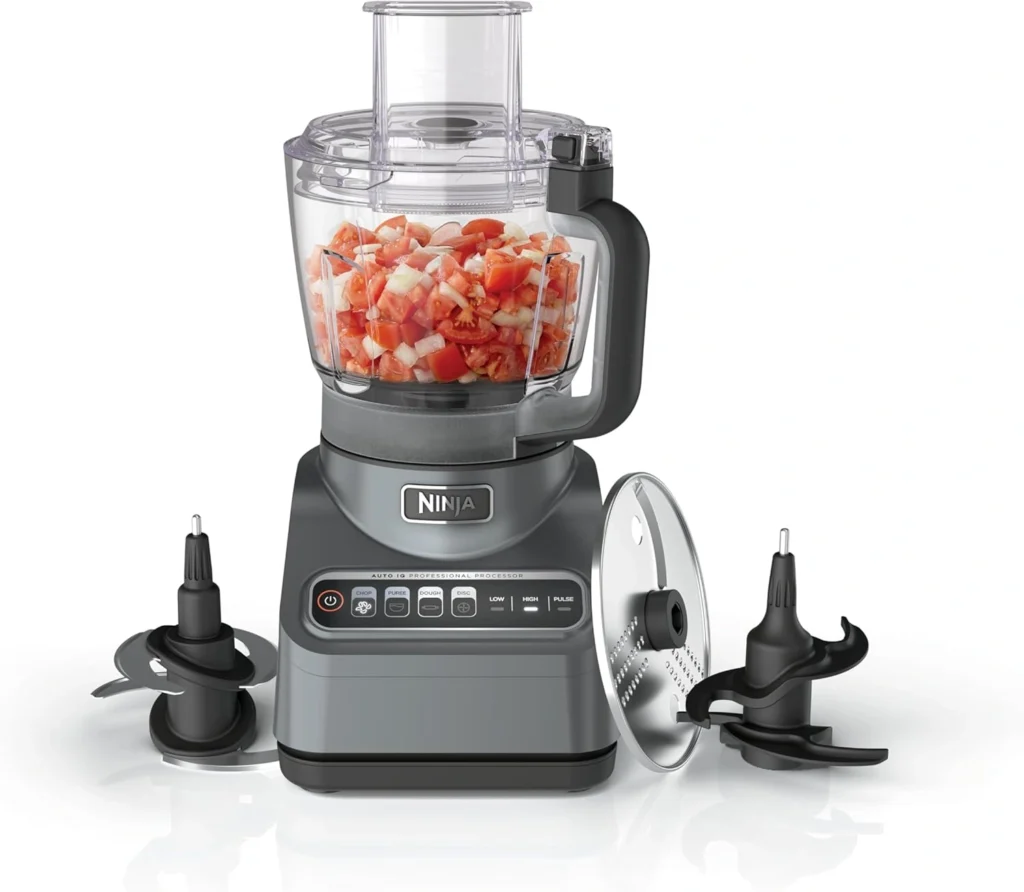
Several brands offer combination units — a single motor base with both a blender jar and a food processor bowl attachment. The Ninja Professional Plus and Cuisinart combo units are the most capable 2026 options. These represent an excellent space-efficient solution for kitchens that genuinely cannot accommodate two separate appliances.
The High-Powered Blender Exception:
A Vitamix or Blendtec high-powered blender can approximate some food processor tasks — chunky salsa, thick hummus — better than a standard blender due to its variable speed control and tamper tool. However, it still cannot shred, slice, or make pastry dough, and it costs significantly more than a standard blender.
Sarah’s Personal Food Processor vs Blender Setup
For transparency, here is exactly what I use in my Austin kitchen and why:
My Food Processor: Cuisinart Custom 14-Cup
- Used for: Weekly vegetable prep, hummus, salsa, pie crust, shredded cheese, coleslaw
- Frequency: 3-4 times per week
My Blender: Vitamix 5200
- Used for: Morning smoothies, butternut squash soup, nut butter, frozen margaritas
- Frequency: Daily for smoothies, weekly for soups
My Mini Food Processor: Cuisinart Mini-Prep Plus
- Used for: Mincing garlic, grinding spices, small batch sauces
- Frequency: 2-3 times per week
The Honest Assessment:
I reach for the food processor more frequently than the blender for cooking tasks — but the blender is used daily for smoothies. Both appliances serve irreplaceable roles in my efficient kitchen.
Common Misconceptions in the Food Processor vs Blender Debate
Misconception 1: “A powerful blender can do everything a food processor does”
False. No blender — regardless of power — can slice, shred, or make pastry dough. The blade design and bowl shape make these tasks physically impossible in a blender.
Misconception 2: “A food processor makes better smoothies if you add enough liquid”
False. A food processor makes thicker, coarser smoothies than a blender even with added liquid. The vortex action of a blender is fundamentally superior for smooth liquid processing.
Misconception 3: “You only need one or the other”
Partially true short-term. For a complete cooking repertoire, both appliances serve genuinely distinct purposes that the other cannot replicate.
Misconception 4: “The more expensive the blender, the better it works as a food processor”
False. A $600 Vitamix still cannot shred cheese or make flaky pie crust. Price does not change the fundamental engineering limitations of the blender design.
Sarah’s Final Advice
The food processor vs blender question has a clear answer when you understand what each appliance actually does. They are not competitors — they are partners that cover opposite ends of the kitchen processing spectrum. A blender handles liquid-dominant tasks with unmatched smoothness. A food processor handles solid-dominant tasks with unmatched versatility.
Start with the appliance that matches your most frequent cooking tasks. If you make smoothies daily — buy the blender first. If you cook from scratch regularly — buy the food processor first. Then add the complementary appliance when your cooking ambitions expand.
For specific appliance recommendations, see my Best Food Processor 2026 for my top food processor picks, or my Best Blenders for Smoothies 2026 for the top blender recommendations. If you are specifically choosing between two high-powered blenders, see my Vitamix vs Ninja 2026 comparison.
Shop the Kitchen: Sarah’s Recommended Pairing
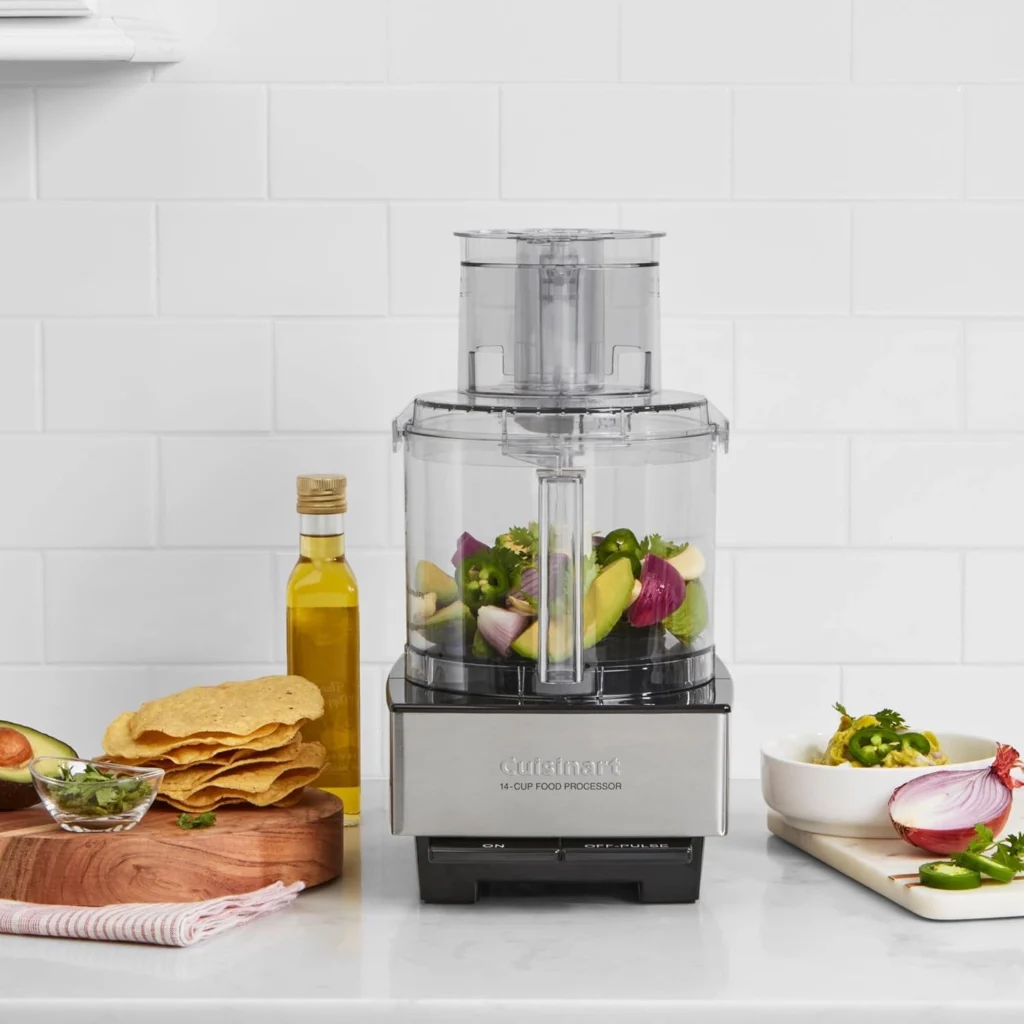
1. Cuisinart Custom 14-Cup Food Processor
My top food processor recommendation for 2026. The 720W motor, 14-cup bowl, and complete attachment set handle the full range of solid food processing tasks that no blender can replicate. The foundation of an efficient cooking kitchen.
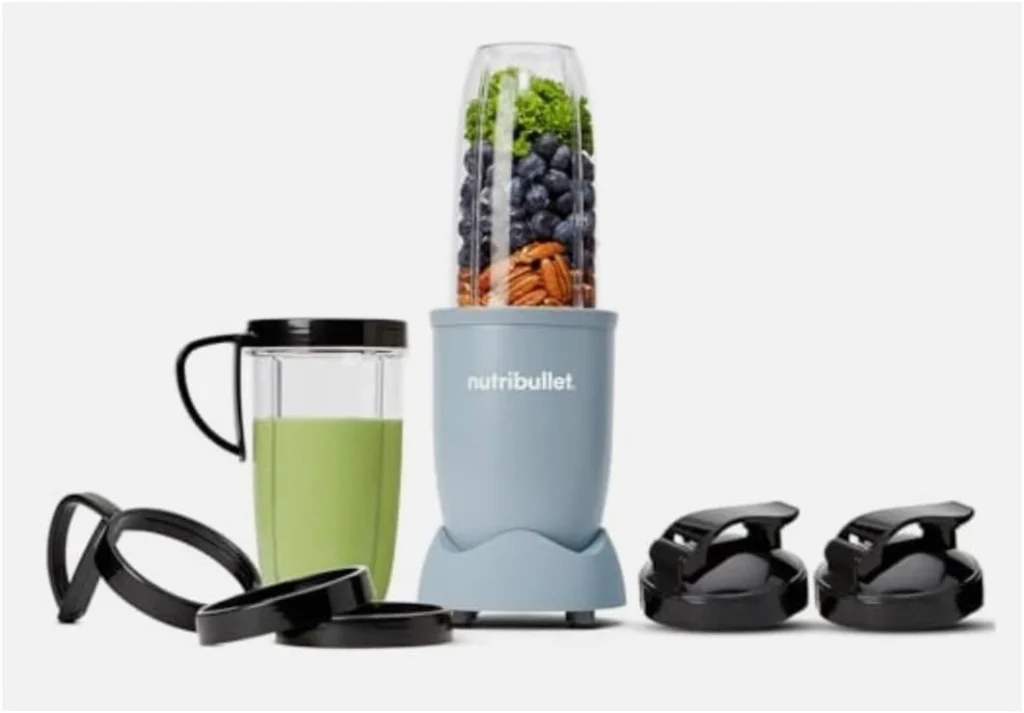
2. NutriBullet Pro 900 Personal Blender
The most space-efficient blender pairing for a food processor owner. The compact personal blender format handles daily smoothies, protein shakes, and small-batch soups without the counter space footprint of a full-size blender. The ideal complementary appliance for a food processor-primary kitchen.
3. Ninja Professional Plus Kitchen System (Blender + Food Processor Combo)
The best single-unit solution for kitchens that cannot accommodate two separate appliances. One motor base powers both a full-size blender jar and a food processor bowl, covering the complete range of liquid and solid food processing tasks in a single countertop footprint.