If you’ve ever reached into your bread bag only to find rock-hard slices or fuzzy green mold, you’re searching for how to keep bread fresh longer. Bread is one of the most commonly wasted foods in American households—primarily because most people store it incorrectly. The difference between bread that lasts 2 days and bread that lasts 2 weeks comes down to one thing: understanding the science of bread staleness.
As a kitchen efficiency expert based in Austin, bread storage is a topic I take seriously. Whether you buy artisan sourdough, homemade whole wheat, or standard sandwich bread, understanding how to keep bread fresh longer will save you money, reduce waste, and ensure you always have great-tasting bread available.
Here is my professional guide on how to keep bread fresh longer using seven proven methods based on food science.
Table of Contents
Understanding Why Bread Goes Stale
Before we tackle how to keep bread fresh longer, let’s understand the two separate processes that ruin bread:
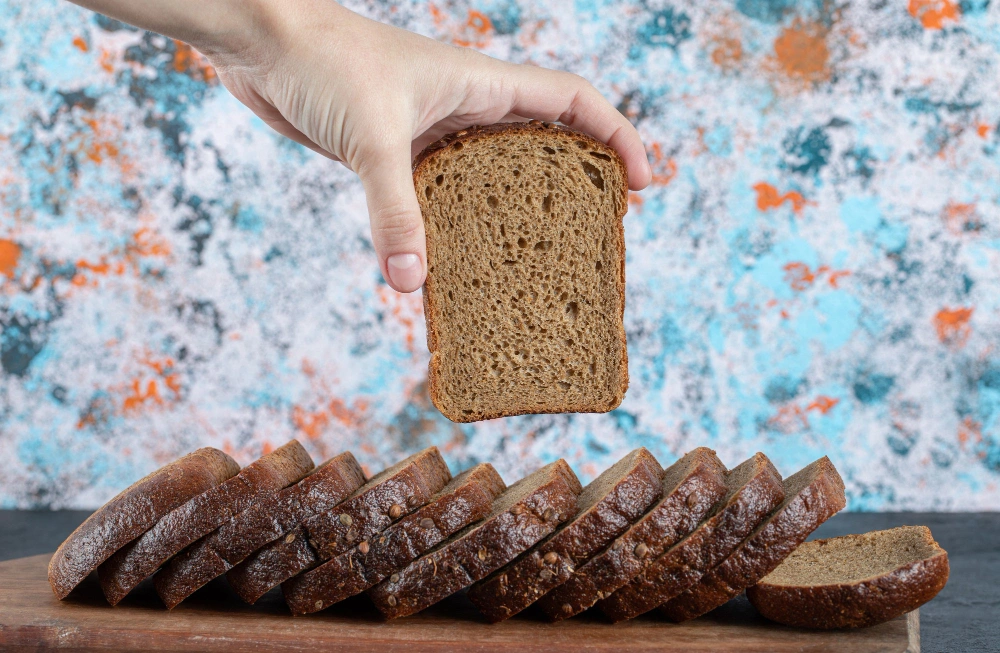
Process 1: Staling (Retrogradation)
Staling is NOT about losing moisture—it’s about starch molecules reorganizing. When bread cools after baking, the starch molecules (amylose and amylopectin) begin “retrogradation”—recrystallizing into a more ordered structure that creates a firm, dry texture.
The Counterintuitive Truth: The refrigerator dramatically ACCELERATES staling. Cold temperatures (35-40°F) are actually the ideal range for starch retrogradation. This is why refrigerated bread goes stale up to 6 times faster than room-temperature bread.
Process 2: Mold Growth
Mold growth is caused by fungal spores that are present on virtually all bread surfaces. These spores require:
- Moisture (above 15% water activity)
- Warmth (above 50°F)
- Time (usually 3-7 days at room temperature)
The Challenge: The ideal conditions for preventing staling (warmer temperatures) are also ideal for mold growth. This is the central tension in how to keep bread fresh longer.
Method 1: The Bread Box Method (The Gold Standard for Room Temperature)
This is the best answer to how to keep bread fresh longer for everyday sandwich bread and soft loaves.
The Science:
A bread box creates a microclimate with slightly higher humidity than open air (preventing excessive drying) while allowing enough air circulation to prevent mold-promoting moisture accumulation.
The 2026 Method:
- Allow bread to cool completely before storing (never store warm bread—condensation creates mold)
- Keep bread in its original bag, twisted closed, inside the bread box
- Store the bread box in a cool location away from direct sunlight and the stove
- Clean the bread box weekly with white vinegar to prevent mold spore accumulation
The Result: Soft bread stays fresh for 4-5 days in a bread box vs. 2-3 days in a plastic bag on the counter.
Best Bread Box Features to Look For in 2026:
- Ventilation holes for air circulation
- Bamboo or stainless steel (naturally antimicrobial)
- Large enough for your standard loaf size
- Easy to clean interior
Best For: Soft sandwich bread, dinner rolls, and bagels consumed within 5 days.
Related Guide: See my Foods You Should Never Store in the Refrigerator for why the fridge is the enemy of bread.
Method 2: The Freezer Method (The Ultimate Preservation)
This is the most efficient answer to how to keep bread fresh longer and the method I use most frequently in my Austin kitchen.
The Science:
Freezing stops both staling retrogradation and mold growth simultaneously by halting all molecular activity. The key is freezing quickly to create small ice crystals that don’t damage the bread’s structure.
The 2026 Method (Whole Loaf):
- Slice the entire loaf before freezing (this allows you to remove individual slices without thawing the whole loaf)
- Place parchment paper between slices to prevent them sticking together
- Return the sliced loaf to its original bag
- Seal tightly, pressing out as much air as possible
- Freeze immediately
The 2026 Method (Individual Portions):
- Slice bread as needed
- Place individual slices in a zip-lock bag with the air pressed out
- Freeze in portion sizes you’ll use at one time
The Thawing Method:
- For toast: Toast directly from frozen (add 1-2 minutes to standard toast time)
- For sandwiches: Leave on the counter for 15-20 minutes at room temperature
- For full loaves: Wrap in foil and heat at 350°F for 10-15 minutes
The Result: Frozen bread maintains peak quality for 2-3 months.
Related Guide: See my How to Reduce Kitchen Waste for more zero-waste food strategies.
Method 3: The Original Packaging Method (For Store-Bought Bread)
For commercial sandwich bread, this is the simplest answer to how to keep bread fresh longer.
The Science:
Commercial bread bags are specifically engineered for bread storage. They contain micro-perforations that allow minimal air exchange while maintaining appropriate humidity levels.
The 2026 Method:
- Keep bread in its original bag
- Twist the bag tightly closed after each use
- Secure with the original twist tie or a binder clip
- Store at room temperature away from heat sources
- Never use open bags or loose wrapping
The Crucial Mistake to Avoid:
Many people store bread with the bag loosely closed or folded over. This allows too much air exchange and dramatically accelerates staling.
The Result: Commercial bread stays fresh for 5-7 days in its original tightly-sealed packaging.
Best For: Standard commercial sandwich bread consumed within one week.
Method 4: The Cloth Bag or Linen Wrap Method (For Artisan Bread)
For crusty artisan breads like sourdough, baguettes, and rustic loaves, this is the professional answer to how to keep bread fresh longer.
The Science:
Artisan bread has a fundamentally different structure than commercial bread. Its open crumb and thick crust require airflow to maintain crust integrity. Plastic wrapping traps moisture and turns the crispy crust into a soft, soggy shell within hours.
The 2026 Method:
- Allow the bread to cool completely on a wire rack (never rush this step)
- Wrap loosely in a clean linen cloth, cotton bread bag, or paper bag
- Store cut-side down on the counter or in a bread box
- Consume within 2-3 days for peak quality
The Cut Surface Strategy:
When you cut an artisan loaf, the exposed crumb dries out rapidly. Prevent this by:
- Placing the cut end against a flat surface
- Covering the cut end with the heel of the loaf
- Wrapping only the cut end in plastic while leaving the crust exposed to air
The Result: Artisan bread maintains crust integrity for 2-3 days with cloth storage.
Best For: Sourdough, baguettes, ciabatta, and any crusty artisan bread.
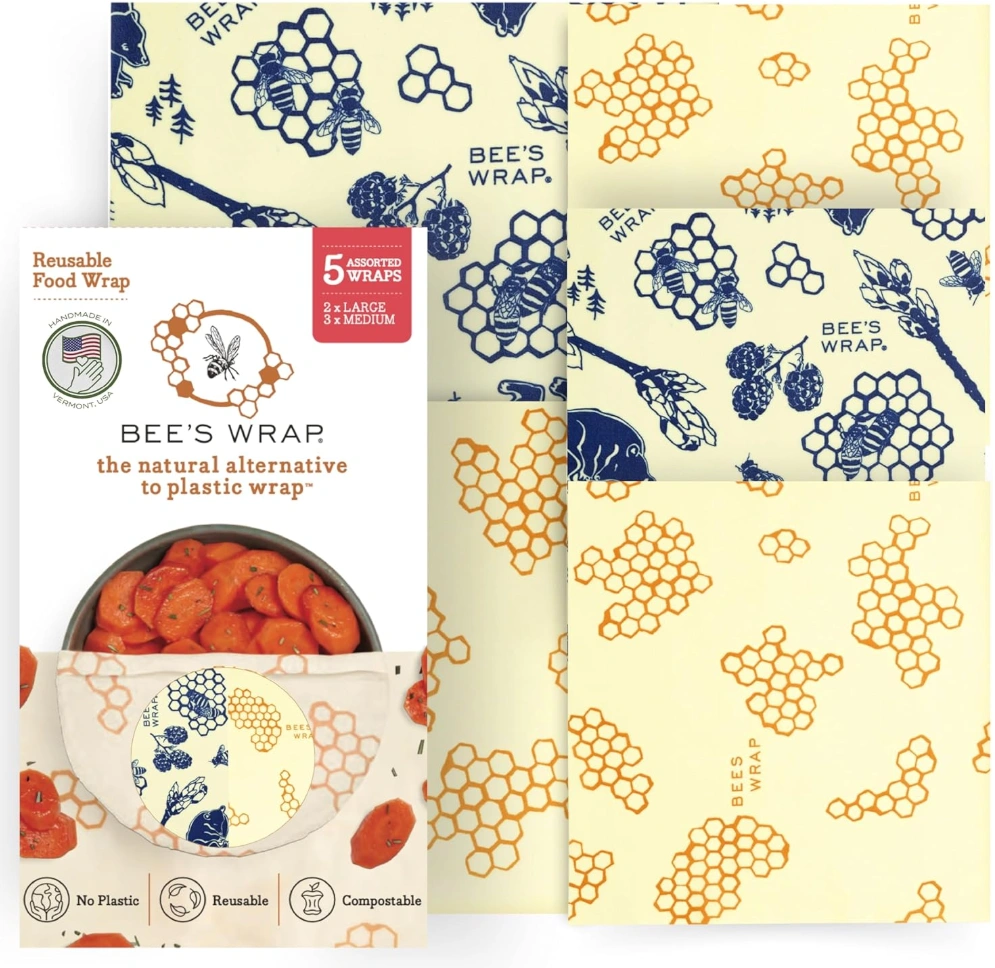
Method 5: The Beeswax Wrap Method (The Eco-Friendly Option)
For those following my How to Reduce Kitchen Waste philosophy, beeswax wraps are the sustainable answer to how to keep bread fresh longer.
What You Need:
- Beeswax food wraps (reusable and washable)
The 2026 Method:
- Allow bread to cool completely
- Wrap tightly in beeswax wrap, using the warmth of your hands to mold it around the loaf
- The wax creates a natural seal that maintains appropriate humidity
- Store at room temperature away from heat
Why It Works:
Beeswax wraps are breathable like cloth but create a slightly better moisture seal than linen. The natural antimicrobial properties of beeswax also help inhibit mold growth.
The Result: Bread stays fresh for 3-5 days in beeswax wrap.
Cost vs. Benefit:
Beeswax wraps cost more upfront ($15-$25) but replace disposable plastic bags for years, making them highly cost-effective long-term.
Best For: Eco-conscious households and anyone wanting a sustainable alternative to plastic.
Method 6: The Brown Paper Bag Method (The Emergency Solution)
When you have no other storage options, this is the fastest answer to how to keep bread fresh longer using something nearly everyone has at home.
The 2026 Method:
- Place bread in a brown paper bag
- Roll the top down tightly to close
- Store at room temperature away from direct sunlight
Why It Works:
Brown paper allows just enough air circulation to prevent mold while absorbing some surface moisture. It’s not as effective as a bread box or cloth bag, but significantly better than leaving bread out uncovered.
The Result: Bread stays acceptable quality for 2-3 days in a paper bag.
Best For: Emergency storage when other options aren’t available.
Method 7: The Reviving Method (For Already-Stale Bread)
Sometimes the question isn’t how to keep bread fresh longer—it’s how to revive bread that’s already gone stale.
The Science:
Staling is a reversible process when heat is applied. Warming bread above 140°F causes the recrystallized starch molecules to reorganize back into their original amorphous state—temporarily restoring softness.
Method 7A: The Oven Revival
- Run the bread briefly under cold running water (don’t soak—just a quick pass)
- Wrap in aluminum foil
- Place in a 300°F oven for 10-15 minutes
- Remove foil for the last 5 minutes to crisp the crust
Method 7B: The Microwave Revival (Quick Fix)
- Wrap the bread in a slightly damp paper towel
- Microwave for 10 seconds at a time until warm
- Eat immediately—the bread will restale within minutes of cooling
Method 7C: The Toaster Revival
Simply toast stale bread. The heat permanently transforms the stale texture into a crispy, enjoyable result.
The Zero-Waste Uses for Very Stale Bread:
- Breadcrumbs: Process in a food processor and freeze
- Croutons: Cube, toss with oil and herbs, bake at 375°F for 15 minutes
- French toast: Stale bread actually absorbs the egg mixture better than fresh
- Bread pudding: The classic use for day-old bread
- Panzanella salad: Italian bread salad that specifically requires stale bread
Bread Storage Method Comparison Table
| Method | Freshness Extension | Best Bread Type | Cost |
|---|---|---|---|
| Bread Box | 4-5 days | Soft sandwich bread | $20-$60 |
| Freezer | 2-3 months | All types | Free |
| Original Packaging | 5-7 days | Commercial bread | Free |
| Cloth/Linen Bag | 2-3 days | Artisan/Crusty bread | $10-$20 |
| Beeswax Wrap | 3-5 days | Most types | $15-$25 |
| Paper Bag | 2-3 days | Emergency storage | Free |
| Revival Methods | Immediate use | Stale bread | Free |
Bread Type Specific Storage Guide
| Bread Type | Best Storage | Worst Storage | Expected Life |
|---|---|---|---|
| Commercial Sandwich Bread | Original bag + bread box | Refrigerator | 5-7 days |
| Artisan Sourdough | Cloth bag or cut-side down | Plastic bag | 2-4 days |
| Baguette | Paper or cloth wrap | Plastic bag | 1-2 days |
| Homemade Bread | Cloth bag + bread box | Refrigerator | 3-5 days |
| Bagels | Freezer (best) or room temp | Refrigerator | 1-2 days room / 3 months frozen |
| Dinner Rolls | Airtight bag or freezer | Open counter | 3-4 days |
| Flatbreads/Tortillas | Airtight bag in fridge | Open counter | 1 week in fridge |
The Refrigerator Myth: The Most Important Warning
The single most common mistake when learning how to keep bread fresh longer is refrigerating it. This deserves its own section because it’s so widespread and so counterproductive.
Why the Refrigerator Ruins Bread:
The optimal temperature range for starch retrogradation (staling) is 35°F-40°F—which is exactly the temperature of your refrigerator. Refrigerated bread goes stale up to 6 times faster than room-temperature bread.
The Only Exception:
In extremely hot and humid climates (above 85°F and 80% humidity), the risk of mold growth may outweigh the staling risk. In these conditions, refrigerating is acceptable if you plan to toast the bread before eating.
The Better Alternative: If you’re concerned about mold growth, freeze the bread instead. Freezing prevents both staling AND mold—the refrigerator prevents neither effectively.
Sarah’s Weekly Bread Management System
Here is how I manage bread as part of my 1-Hour Meal Prep System:
Sunday:
- Purchase or bake bread for the week
- Immediately slice the entire loaf
- Store first 3-4 days’ worth in a bread box
- Freeze the remainder in individual portions
Monday-Wednesday:
- Use bread from the bread box (at peak freshness)
Thursday-Friday:
- Transfer frozen slices to counter the night before needed
The Zero-Waste Result:
Zero bread is ever thrown away because the freezer serves as a perfect “pause button” on freshness.
Sarah’s Final Advice
Mastering how to keep bread fresh longer comes down to two fundamental rules:
- Never refrigerate bread (accelerates staling dramatically)
- Freeze what you won’t eat within 5 days (the perfect preservation method)
The bread box is the best room-temperature solution for soft breads, while cloth or paper wrapping works best for artisan loaves that need to breathe. And when in doubt, slice and freeze—your future self will thank you.
For more food preservation strategies, check out my Foods You Should Never Store in the Refrigerator or see my How to Reduce Kitchen Waste guide.
Shop the Fresh: Sarah’s Bread Storage Essentials
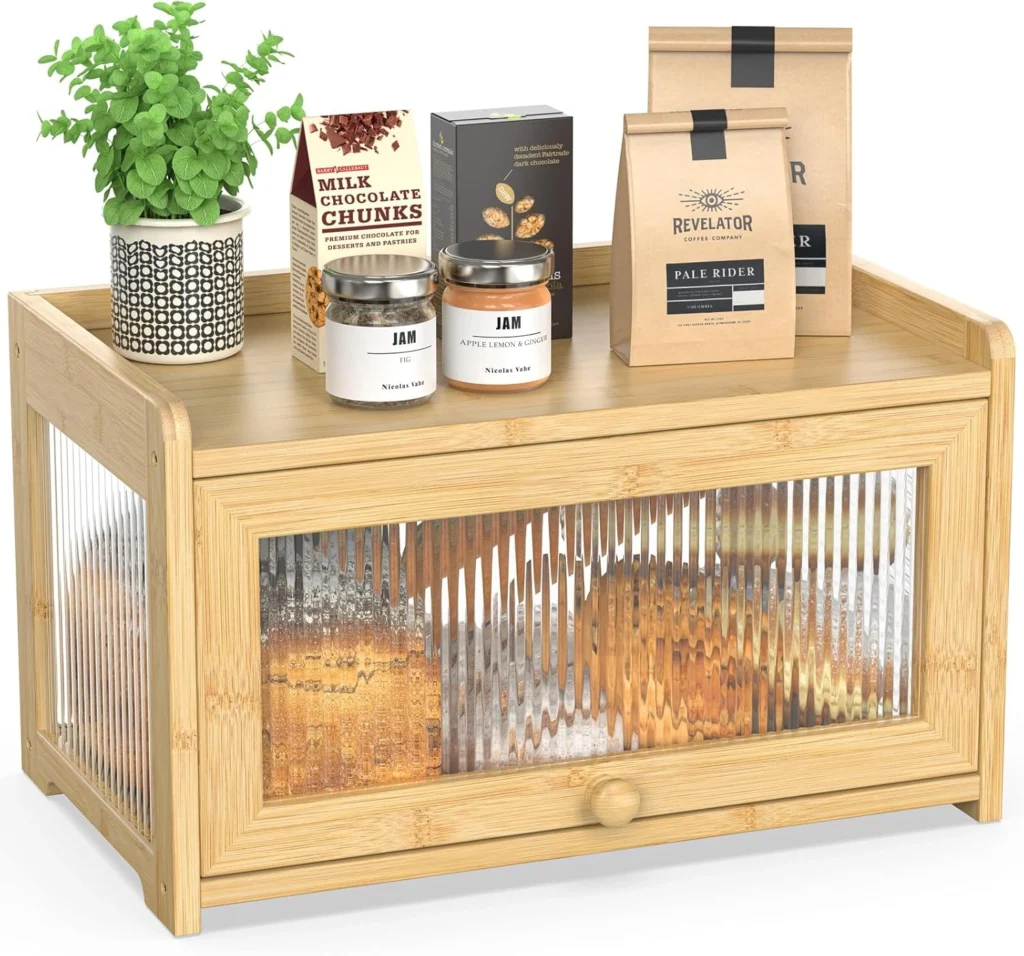
1. Bamboo Bread Box with Stainless Steel Lid
The most elegant and functional bread storage solution available. Naturally antimicrobial bamboo with a roll-top stainless lid that seals properly and looks stunning on any counter.
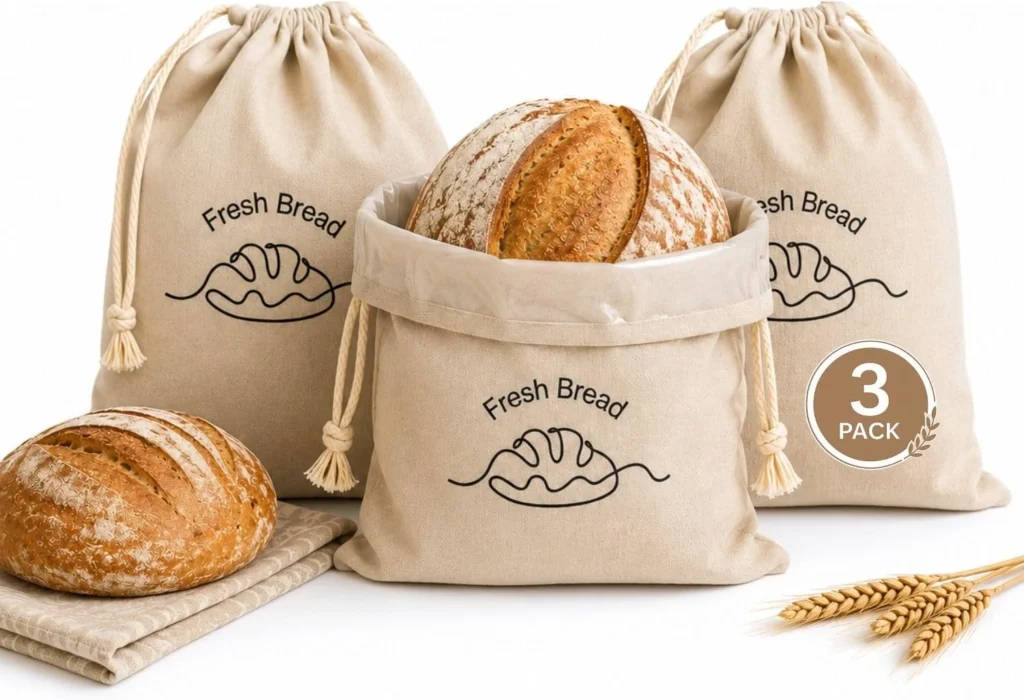
2. Reusable Linen Bread Bags (Set of 3)
The professional choice for artisan bread storage. These breathable linen bags maintain crust integrity while preventing excessive moisture loss.
3. Beeswax Food Wraps (Large Size, 3-Pack)
The sustainable alternative to plastic wrap for bread storage. Naturally antimicrobial, reusable for years, and biodegradable.