If you have been hearing more and more about carbon steel pan cookware in 2026 and wondering whether it deserves a place in your kitchen alongside your stainless steel pots and cast iron skillets, the answer is almost certainly yes. A carbon steel pan occupies a unique and irreplaceable position in the cookware hierarchy — combining the rapid heat response of stainless steel with the natural non-stick seasoning capability of cast iron in a lightweight, versatile package that professional restaurant kitchens have relied on for over a century.
As a kitchen efficiency expert based in Austin, Texas, I cook on carbon steel regularly and consider it one of the most underappreciated cookware materials available to home cooks in 2026. The carbon steel pan is the cookware that professional chefs use in restaurant kitchens worldwide — not stainless steel, not non-stick, and not cast iron — because it delivers the combination of responsiveness, durability, and cooking performance that demanding professional environments require. Understanding what carbon steel cookware is, how it compares to stainless steel and cast iron, and how to season and maintain it properly is the key to unlocking one of the most versatile cooking tools available.
Here is my complete, practical guide to carbon steel pan cookware in 2026 — covering everything from initial seasoning to daily cooking technique and long-term maintenance.
Table of Contents
What Is Carbon Steel Cookware?
Before we dive into the specifics of carbon steel pan performance, it is essential to understand what carbon steel actually is and why its composition produces such unique cooking properties.
The Metallurgy of Carbon Steel:
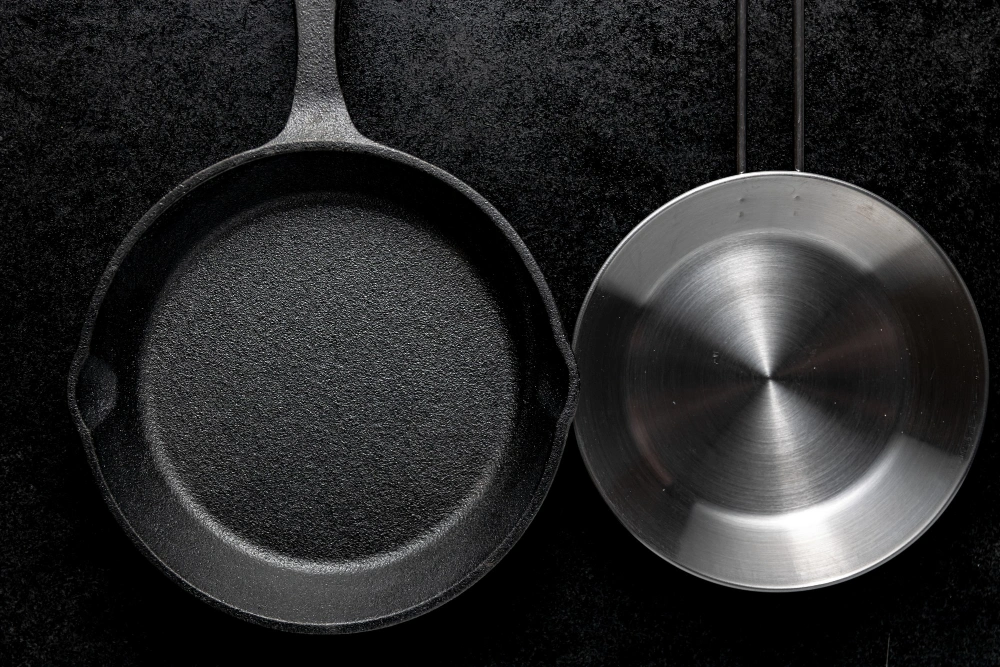
Carbon steel is an alloy of iron and carbon — typically containing 98-99% iron and 1-2% carbon. This composition sits between cast iron (2-4% carbon) and stainless steel (iron with chromium and negligible carbon) in the cookware spectrum.
The carbon content is the critical variable:
- Too little carbon (stainless steel): Cannot develop seasoning, highly corrosion resistant
- Moderate carbon (carbon steel): Develops excellent seasoning, moderate rust resistance
- High carbon (cast iron): Develops excellent seasoning, brittle, very heavy
Why Carbon Content Matters:
The 1-2% carbon content in carbon steel creates a material that:
- Seasons like cast iron: The iron surface absorbs polymerized oil layers to create a natural non-stick coating
- Responds like stainless steel: The thinner gauge heats and cools rapidly, responding immediately to heat adjustments
- Weighs significantly less than cast iron: A 12-inch carbon steel pan weighs approximately 4 pounds versus 8 pounds for a cast iron equivalent
The Professional Kitchen Secret:
The reason professional restaurant kitchens use carbon steel cookware almost exclusively — rather than the non-stick and stainless steel pans most home cooks default to — is the unique combination of:
- Speed: Carbon steel heats faster than cast iron and responds to heat changes faster than either cast iron or stainless
- Versatility: Works on all stovetop types, under the broiler, and in the oven
- Durability: A well-seasoned carbon steel pan lasts decades with proper care
- Natural non-stick: The seasoning layer improves with every use — unlike Teflon coatings that degrade
Carbon Steel Pan vs Stainless Steel: The Complete Comparison
With 883 monthly Bing searches for “carbon steel vs stainless steel,” this comparison is clearly one of the most important questions home cooks are asking in 2026.
The Fundamental Difference:
| Feature | Carbon Steel Pan | Stainless Steel Pan |
|---|---|---|
| Composition | Iron + 1-2% carbon | Iron + chromium (10.5%+) |
| Seasoning | Yes — develops natural non-stick | No — non-reactive surface |
| Heat Response | Very Fast ✅ | Fast ✅ |
| Heat Retention | Good | Moderate |
| Weight | Light to Medium | Medium |
| Rust Resistance | Low (requires maintenance) | High (rust resistant) |
| Acidic Foods | Avoid during seasoning | Fully compatible ✅ |
| Dishwasher Safe | No ❌ | Yes (usually) ✅ |
| Lifespan | Decades with care | Decades with care |
| Price | $40-$200 | $30-$300 |
| Best For | Searing, eggs, crepes, wok cooking | Sauces, acidic foods, braising |
When to Choose Carbon Steel Over Stainless Steel:
Choose carbon steel when:
- You want a natural non-stick cooking surface without chemical coatings
- You cook high-heat searing tasks like steaks and chicken thighs regularly
- You want a lightweight alternative to cast iron for stovetop to oven cooking
- You cook eggs, crepes, or other delicate proteins that stick to stainless steel
When to Choose Stainless Steel Over Carbon Steel:
Choose stainless steel when:
- You cook tomato-based sauces, wine braises, and other acidic dishes regularly
- You want dishwasher-safe cookware for convenient cleanup
- You prefer cookware that requires no seasoning maintenance
- You cook with lemon juice, vinegar, or other acidic ingredients frequently
The Professional Kitchen Answer:
Most professional kitchens use BOTH — carbon steel for searing, eggs, and high-heat cooking; stainless steel for sauces, acidic preparations, and braises. The two materials complement each other perfectly in a complete cookware collection.
Related Guide: See my How to Clean Stainless Steel Pans for stainless steel care that complements your carbon steel maintenance routine.
Carbon Steel Pan vs Cast Iron: The Sister Materials Comparison
The Similarities:
Carbon steel and cast iron are more similar than different — both are iron-based, both develop seasoning, both produce a natural non-stick surface, and both require similar maintenance. The differences are primarily about weight, thickness, and heat response:
| Feature | Carbon Steel | Cast Iron |
|---|---|---|
| Weight (12-inch pan) | ~4 lbs | ~8 lbs |
| Thickness | Thin (2-3mm) | Thick (6-8mm) |
| Heat Response | Very Fast | Slow |
| Heat Retention | Moderate | Excellent |
| Seasoning | Same process | Same process |
| Durability | Excellent | Virtually indestructible |
| Price | Similar | Similar |
| Best For | Responsive cooking | Long, even cooking |
When to Choose Carbon Steel Over Cast Iron:
Choose carbon steel when:
- You want a lighter pan that is easier to handle and maneuver
- You need rapid heat response for precise temperature control
- You cook crepes, eggs, and delicate foods that require quick heat adjustments
- You want a large wok-style cooking vessel that cast iron cannot practically provide
When to Choose Cast Iron Over Carbon Steel:
Choose cast iron when:
- You want maximum heat retention for bread baking and long braising
- You prefer the thicker base that distributes heat more evenly initially
- You do not mind the heavier weight for the cooking tasks you perform
- You cook campfire meals where durability above all else is the priority
Related Guide: See my Lodge Cast Iron Review 2026 for cast iron recommendations that complement your carbon steel collection.
How to Season a Carbon Steel Pan (And Wok)
With 365 monthly Bing searches for “how to season a wok” and carbon steel pan seasoning being the most commonly asked question for new owners, this section provides the complete seasoning guide.
The Science of Carbon Steel Seasoning:
The seasoning process for carbon steel is identical to cast iron — polymerized oil layers bond chemically to the iron surface, filling the microscopic pores and creating a smooth, natural non-stick coating. The thinner gauge of carbon steel means it heats faster in the oven and responds to oil polymerization more quickly than cast iron — typically producing usable seasoning in fewer cycles.
Step 1: Remove the Factory Coating
New carbon steel pans ship with a factory coating — typically beeswax or oil — that prevents rust during shipping and storage. This coating must be completely removed before seasoning:
- Wash the pan thoroughly with hot soapy water and a scrubbing pad — this is the only time you should use soap on carbon steel
- Rinse thoroughly and dry immediately on the stovetop over medium heat for 3-5 minutes
- The pan surface will begin to show blue, grey, or rainbow discoloration as it heats — this is normal and indicates the factory coating is burning off
- Allow to cool slightly before proceeding to seasoning
Step 2: Apply an Ultra-Thin Oil Layer
- Heat the pan on the stovetop over medium heat until very hot
- Remove from heat and add a small amount of oil — approximately half a teaspoon for a 10-inch pan
- Use a paper towel held with tongs to spread the oil across every surface — cooking area, sides, and exterior
- Buff the oil until the pan appears almost dry — excess oil produces a sticky, gummy seasoning
The Best Oils for Carbon Steel Seasoning:
| Oil | Smoke Point | Seasoning Quality | Recommended |
|---|---|---|---|
| Flaxseed Oil | 225°F | Excellent | Yes ✅ |
| Grapeseed Oil | 420°F | Very Good | Yes ✅ |
| Avocado Oil | 520°F | Excellent | Yes ✅ |
| Crisco Shortening | 360°F | Very Good | Yes ✅ |
| Canola Oil | 400°F | Good | Yes ✅ |
| Olive Oil | 375°F | Poor | No ❌ |
Step 3: Stovetop Seasoning Method (Faster Than Oven)
Carbon steel can be seasoned directly on the stovetop — faster than the oven method required for cast iron:
- After applying the ultra-thin oil layer, place the pan back on the stovetop over medium-high heat
- Heat until the oil begins to smoke — this indicates polymerization is occurring
- Continue heating for 3-5 minutes after smoking begins
- Remove from heat and allow to cool for 10 minutes
- Repeat the oil application and heating process 3-5 times in a single session
- The pan will develop a progressively darker, more even appearance with each cycle
Step 4: Oven Seasoning Method (More Even Results)
For more even seasoning coverage — particularly on the sides and exterior:
- Apply ultra-thin oil layer to all surfaces
- Place upside down in a preheated 450°F-500°F oven
- Bake for 1 hour
- Allow to cool completely in the oven
- Repeat 3-5 times for a strong initial seasoning base
The Carbon Steel Wok Seasoning Specifics:
Seasoning a carbon steel wok requires the same process with one important adaptation — the larger surface area and curved sides require more thorough oil distribution:
- Complete the factory coating removal (Step 1)
- Place the wok on the largest burner at maximum heat
- Apply oil in very small amounts to sections of the wok — working around the entire surface
- Use folded paper towels held with tongs to distribute oil across the curved sides
- Heat until smoking, then allow to cool and repeat 4-6 times
- The wok is ready for cooking when it has developed a uniform dark patina
Related Guide: See my How to Season a Cast Iron Pan for the same seasoning principles applied to cast iron cookware.
How to Cook with a Carbon Steel Pan
Understanding the cooking technique that makes carbon steel perform at its best is as important as knowing how to season it.
The Preheating Protocol:
Carbon steel must be properly preheated before adding oil or food — this is the most important cooking technique for carbon steel success:
- Place the empty carbon steel pan on medium to medium-high heat
- Allow to preheat for 2-3 minutes — longer than most home cooks expect
- Test with the water droplet method: a few drops of water should immediately bead up and roll around the pan (Leidenfrost effect) — this indicates correct temperature
- Add oil and allow it to heat for 30 seconds until shimmering
- Add food — protein should release naturally when properly seared
Why the Preheating Step Is Critical:
Adding food to an insufficiently preheated carbon steel pan is the primary cause of sticking. The Leidenfrost effect — where a thin layer of steam forms between the food and the pan surface at the correct temperature — is what creates the natural release that makes carbon steel a joy to cook on. Rush the preheat and food sticks. Take the time and food releases perfectly.
The Best Foods for Carbon Steel:
- Steaks and proteins: The rapid heat response and high heat tolerance produce exceptional searing results
- Eggs: A well-seasoned carbon steel pan produces perfectly cooked eggs with a clean release
- Crepes and pancakes: The smooth, even surface and rapid heat response are ideal for delicate thin batters
- Stir-fry: Carbon steel woks are the definitive stir-fry tool — high heat, rapid response, large curved surface
- Vegetables: High-heat roasting and sautéing produce better caramelization than stainless steel
Foods to Avoid During Seasoning Development:
During the first 3-6 months of building seasoning, avoid:
- Tomatoes, citrus, and wine-based sauces — strip developing seasoning
- Extended boiling or simmering — degrades seasoning layers
- Very sticky foods like sugar-glazed preparations — difficult to clean without damaging new seasoning
How to Clean and Maintain a Carbon Steel Pan
The Daily Cleaning Routine:
- Allow the pan to cool slightly — never rinse a scorching hot carbon steel pan with cold water
- Rinse with hot water and scrub with a stiff brush or chain mail scrubber
- A small amount of mild dish soap is acceptable for established seasoning — avoid soaking
- Dry immediately and completely on the stovetop over low heat
- While still warm, apply a microscopic amount of oil and buff dry with a paper towel
- Store in a dry location
Removing Stuck Food:
- Add water to the pan and bring to a boil on the stovetop
- The boiling water loosens stuck food without requiring aggressive scrubbing
- Pour out the water and scrub with a brush
- Dry and re-oil immediately
Rust Removal:
If rust develops from improper storage or drying:
- Scrub with steel wool or a chain mail scrubber until rust is completely removed
- Wash with soap, rinse, and dry completely on the stovetop
- Complete 3-5 full seasoning cycles to rebuild the protective coating
The Carbon Steel Wok: A Dedicated Guide
With 620 monthly Bing searches specifically for “carbon steel wok,” this dedicated section addresses the unique characteristics of carbon steel in wok form.
Why Carbon Steel Is the Only Material for a Wok:
Traditional Asian cooking requires a wok that:
- Heats to extremely high temperatures rapidly
- Responds immediately to heat changes during stir-frying
- Has a large curved surface for tossing and moving food
- Is light enough to maneuver with one hand
Cast iron is too heavy and too slow. Stainless steel cannot develop the seasoning needed for wok hei — the characteristic smoky, slightly charred flavor of authentic stir-fry. Carbon steel is the only material that meets all four requirements.
Wok Hei — The Carbon Steel Advantage:
“Wok hei” (literally “breath of the wok”) is the smoky, complex flavor that distinguishes restaurant stir-fry from home cooking. It is produced by the reaction between extremely high heat, the carbon steel surface, and the vaporizing oils and juices from the food. This reaction cannot occur in a non-stick pan, a stainless steel pan, or a cast iron wok — only in a properly seasoned carbon steel wok at high heat.
Round Bottom vs Flat Bottom Carbon Steel Wok:
| Type | Best For | Stovetop Compatibility |
|---|---|---|
| Round Bottom | Gas stoves, authentic wok cooking | Gas only (requires wok ring) |
| Flat Bottom | Home kitchens, all stovetops | All stovetops including induction |
The Best Carbon Steel Wok Brands in 2026:
- Joyce Chen: The most recommended carbon steel wok for home cooks — flat bottom, excellent seasoning properties
- Craft Wok: Handspun carbon steel with a traditional round bottom — for gas stove enthusiasts
- Yosukata: Premium carbon steel with excellent initial finish for faster seasoning development
- Lodge: Lodge produces a carbon steel wok that benefits from their seasoning expertise
Carbon Steel Cookware Comparison Table
| Feature | Carbon Steel Pan | Stainless Steel | Cast Iron | Non-Stick |
|---|---|---|---|---|
| Natural Non-Stick | Yes (seasoned) ✅ | No ❌ | Yes (seasoned) ✅ | Yes (coating) ✅ |
| Heat Response | Very Fast ✅ | Fast ✅ | Slow ❌ | Moderate |
| Heat Retention | Good ✅ | Moderate | Excellent ✅ | Moderate |
| Weight | Light ✅ | Medium ✅ | Heavy ❌ | Light ✅ |
| Acidic Food Safe | During seasoning ⚠️ | Yes ✅ | No ❌ | Yes ✅ |
| Oven Safe | Yes (any temp) ✅ | Yes ✅ | Yes (any temp) ✅ | Limited ⚠️ |
| Lifespan | Decades ✅ | Decades ✅ | Generations ✅ | 3-5 years ❌ |
| Maintenance | Moderate | Low | Moderate | Very Low |
| Price | $$ | $$ | $ | $ |
Sarah’s Carbon Steel Maintenance Schedule
After Every Use:
- Rinse with hot water and scrub with a brush
- Dry completely on the stovetop over low heat
- Apply microscopic oil layer and buff dry
- Store in a dry location
Weekly:
- Inspect the seasoning surface for any dull patches or bare metal showing
- Apply an additional thin oil layer to any areas showing wear
- Check the handle connection for any loosening
Monthly:
- Complete one full oven seasoning cycle to refresh and reinforce the seasoning
- Inspect the entire cooking surface for rust, scratches, or seasoning degradation
- Address any rust immediately with steel wool and re-seasoning
Every 6 Months:
- Full seasoning restoration if the cooking surface has developed uneven seasoning
- Strip and re-season if significant rust or damage has occurred
Common Mistakes with Carbon Steel Cookware
When using and maintaining carbon steel pans and woks, avoid these errors:
- Not removing the factory coating before seasoning: The factory anti-rust coating must be completely removed before building seasoning — skipping this step produces poor adhesion
- Applying too much oil during seasoning: Thick oil layers produce sticky, gummy seasoning rather than hard, smooth polymerized layers — always apply ultra-thin coats
- Not preheating properly before cooking: Insufficient preheating is the primary cause of food sticking to carbon steel — always use the water droplet test
- Cooking acidic foods during seasoning development: Tomatoes and citrus strip new seasoning — wait until the surface has developed a uniform dark patina
- Air drying after washing: Any moisture left on carbon steel causes rust — always dry immediately and completely on the stovetop
- Storing with trapped moisture: Even a slightly damp storage environment causes rust — store in a dry location and consider a light oil coating before storage
Sarah’s Final Advice
The carbon steel pan is the cookware that professional chefs choose above all others — not because it is the easiest to maintain, but because it delivers cooking performance that no other material matches for high-heat cooking tasks. The combination of rapid heat response, natural non-stick seasoning, lightweight construction, and virtually unlimited lifespan makes carbon steel one of the highest-value cookware investments available in 2026.
For Austin home cooks specifically, carbon steel is an excellent choice for the high-heat cooking that Texas cuisine demands — searing fajita proteins, cooking at extreme temperatures, and achieving the char and caramelization that defines great Texas cooking. My carbon steel pan handles every task from morning eggs to evening seared steaks with equal capability.
The learning curve is real — properly preheating, building seasoning through cooking, and maintaining the surface requires adjustment from non-stick or stainless steel habits. But the cooking performance on the other side of that learning curve is genuinely extraordinary.
For more cookware guidance, see my Lodge Cast Iron Review 2026 for cast iron alternatives, or explore my How to Clean Stainless Steel Pans for maintaining the stainless steel that complements your carbon steel collection.
Shop the Carbon Steel: Sarah’s Top Picks
1. Made In Blue Carbon Steel Frying Pan (10-inch)
The best carbon steel pan for home cooks in 2026. The blue carbon steel construction develops seasoning faster than standard carbon steel, the ergonomic handle design suits extended cooking sessions, and the 10-inch size is perfect for everyday cooking tasks from eggs to seared proteins.
[Check Price on Amazon]
2. Joyce Chen Pro Chef Flat Bottom Wok (14-inch Carbon Steel)
The most recommended carbon steel wok for home cooks in 2026. The flat bottom design works on all stovetops including induction, the 14-inch size provides adequate cooking surface for family stir-fry portions, and the helper handle makes maneuvering a fully loaded wok safe and comfortable.
[Check Price on Amazon]
3. Beeswax Carbon Steel Seasoning Wax
The best seasoning product for new carbon steel cookware. Applied as the initial seasoning layer, beeswax produces a durable, smooth base seasoning that accelerates the development of subsequent oil-based seasoning layers. Includes application cloth and complete seasoning instructions.
[Check Price on Amazon]