If your coffee maker is brewing slower than usual, producing coffee that tastes noticeably bitter or weak, or displaying a descale indicator light on the control panel, you need to know how to descale a coffee maker immediately. Mineral deposits from hard water accumulate inside your coffee maker over time, coating the internal heating element, water lines, and spray head with a thick layer of calcium and magnesium scale that progressively destroys both the flavor of your coffee and the lifespan of your machine.
As a kitchen efficiency expert based in Austin, Texas, I consider coffee maker descaling one of the most critical and most neglected appliance maintenance tasks in the modern kitchen. Austin has notoriously hard water — one of the highest mineral content municipal water supplies in Texas — which means my coffee maker accumulates mineral deposits significantly faster than machines in softer water areas. I have personally tested every descaling method available in 2026 across multiple coffee maker brands including Ninja, Breville, Cuisinart, and Hamilton Beach, and this guide covers everything you need to know about how to descale a coffee maker correctly, safely, and effectively.
Here is my complete, tested guide on how to descale a coffee maker using five proven methods that work across every major coffee maker brand available in 2026.
Table of Contents
Why Descaling Your Coffee Maker Is Non-Negotiable
Before we tackle how to descale a coffee maker, it is essential to understand what scale buildup actually does to your machine and your coffee.
The Science of Scale Buildup:
Hard water contains dissolved calcium and magnesium minerals. Every time your coffee maker heats water, these minerals precipitate out of solution and deposit on every internal surface they contact. Over weeks and months, this builds into a thick, rock-hard coating called limescale that:
- Reduces heating efficiency: The heating element must work harder to heat water through the insulating scale layer, consuming more electricity and taking longer to reach brewing temperature
- Restricts water flow: Scale narrows the internal water lines, reducing water pressure and producing incomplete, under-extracted, weak brews
- Harbors bacteria: The rough, porous surface of limescale provides an ideal environment for bacteria and mold to colonize inside your machine
- Destroys coffee flavor: Water forced through scale-coated surfaces picks up a distinctly bitter, metallic taste that overwhelms even the finest coffee beans
The Warning Signs Your Coffee Maker Needs Descaling:
- The descale or clean indicator light is illuminated on the control panel
- Brewing cycle takes noticeably longer than when the machine was new
- Coffee tastes bitter, metallic, or noticeably weaker than usual
- The machine produces less coffee volume per cycle than specified
- Unusual gurgling or sputtering sounds during the brew cycle
- Visible white or grey deposits around the spray head or water outlet
How Often Should You Descale Your Coffee Maker:
| Water Type | Descaling Frequency |
|---|---|
| Very Hard Water (Austin, Phoenix, Las Vegas) | Every 1-2 months |
| Hard Water (Most US cities) | Every 2-3 months |
| Moderately Hard Water | Every 3-4 months |
| Soft Water or Filtered Water | Every 6 months |
| Distilled Water Only | Every 6-12 months |
Method 1: The White Vinegar Method (The Natural Standard)
This is the most searched natural answer to how to descale a coffee maker and the most accessible method for every household regardless of machine brand.
The Science:
The acetic acid in white vinegar dissolves calcium carbonate — the primary component of limescale — through an acid-base chemical reaction. The resulting calcium acetate is water-soluble and flushes cleanly through the machine during subsequent rinse cycles.
What You Need:
- White distilled vinegar (minimum 5% acidity)
- Fresh water
- Large mug or carafe
The 2026 Method:
- Empty the water reservoir completely and remove any water filter if installed
- Fill the reservoir with a 50/50 mixture of white vinegar and fresh water
- For heavily scaled machines, use undiluted white vinegar for the first cycle
- Place a large mug or the carafe on the warming plate
- Run a full brew cycle with the vinegar solution
- Halfway through the brew cycle, pause the machine and allow the vinegar solution to sit in the internal components for 30-60 minutes — this extended contact time is critical for dissolving stubborn scale deposits
- Resume and complete the brew cycle
- Discard the vinegar solution from the carafe
- Fill the reservoir with fresh water and run a complete rinse cycle
- Repeat the fresh water rinse cycle a minimum of 3 times — vinegar residue in subsequent brews is unpleasant and a sign of insufficient rinsing
Pro Tip from Sarah:
In my Austin kitchen with our notoriously hard water, I run the vinegar solution through two complete brew cycles before rinsing — the second cycle catches mineral deposits that the first cycle loosened but did not fully flush. This extra step produces noticeably better descaling results for hard water areas.
Best For: All coffee maker brands. Regular maintenance descaling every 2-3 months. Budget-friendly natural approach.
Related Guide: See my How to Descale a Keurig for the same vinegar descaling technique applied specifically to Keurig single-serve machines.
Method 2: The Commercial Descaling Solution Method (The Professional Approach)
For coffee maker owners who want the most effective descaling results without vinegar’s residual odor and extensive rinsing requirements, a commercial coffee maker descaling solution is the professional answer to how to descale a coffee maker.
The Best 2026 Commercial Descaling Options:
- Descaler by Impresa: Universal formula compatible with all coffee maker brands
- Durgol Swiss Espresso Descaler: Professional-grade formula used by baristas
- Full Circle Descaler: Eco-friendly formula with citric acid base
- Affresh Coffee Maker Cleaner: Tablet format for easy dosing
What You Need:
- Commercial descaling solution (brand specific or universal)
- Fresh water
- Large mug or carafe
The 2026 Method:
- Check the descaling solution packaging for the correct dilution ratio for your machine size
- Mix the descaling solution with fresh water in the reservoir according to package instructions
- Place the carafe or a large mug on the warming plate
- Initiate the descaling cycle according to your specific machine’s instructions (see brand-specific section below)
- Allow the descaling solution to run through the machine completely
- For machines without a dedicated descale mode, run a full brew cycle and pause halfway for a 20-30 minute soak
- After the descaling cycle completes, fill the reservoir with fresh water
- Run 2-3 complete rinse cycles to flush all descaling solution residue
- The machine is ready to brew when the water running through smells and tastes completely neutral
Why Commercial Descalers Outperform Vinegar:
Commercial descaling solutions contain citric acid, sulfamic acid, or other descaling compounds specifically formulated for coffee maker internals. They descale more efficiently than vinegar, leave no residual odor, and require fewer rinse cycles — making them the time-efficient professional choice despite the higher cost per session.
Best For: All coffee maker brands. Machines with persistent scale that vinegar has not fully resolved. Users who want faster descaling with fewer rinse cycles.
Method 3: The Citric Acid Method (The Cost-Effective Professional)
For coffee enthusiasts who want commercial-grade descaling effectiveness at a fraction of the cost of branded descaling solutions, food-grade citric acid powder is the professional answer to how to descale a coffee maker economically.
What You Need:
- Food-grade citric acid powder
- Fresh water
- Large mug or carafe
The Citric Acid Solution:
- For a standard 12-cup coffee maker: dissolve 1-2 tablespoons of citric acid powder in a full reservoir of water
- For a smaller 4-6 cup machine: dissolve 1 tablespoon in a full reservoir
The 2026 Method:
- Dissolve the citric acid powder completely in the reservoir water before starting — undissolved crystals can accumulate in internal components
- Run a full brew cycle with the citric acid solution
- Pause halfway through for a 20-30 minute soak
- Complete the cycle and discard the solution
- Run 2-3 fresh water rinse cycles
The Cost Comparison:
| Descaling Method | Cost Per Session | Sessions Per Purchase | Effectiveness |
|---|---|---|---|
| White Vinegar | $0.25 | Unlimited | Good |
| Citric Acid Powder | $0.10 | 20-25 sessions | Excellent |
| Commercial Descaler | $3-6 | 1-2 sessions | Excellent |
| Descaling Tablets | $2-4 | 1 session | Very Good |
Best For: Regular descalers who want professional-grade results at minimal cost. The most economical descaling method that does not sacrifice effectiveness.
Method 4: The Baking Soda Method (The Gentle Alternative)
For coffee makers with light scale buildup or for users who want the gentlest possible natural cleaning approach, baking soda provides a mild alkaline cleaning action that addresses light mineral deposits and coffee oil residue simultaneously.
What You Need:
- 1 tablespoon baking soda
- Full reservoir of fresh water
- Large mug or carafe
The 2026 Method:
- Dissolve 1 tablespoon of baking soda completely in a full reservoir of water
- Run a complete brew cycle with the baking soda solution
- Discard the solution from the carafe
- Run 2 complete fresh water rinse cycles
- The machine is ready to brew
Why Baking Soda Is Different From Vinegar:
Baking soda is an alkali while vinegar is an acid. Baking soda dissolves coffee oils and mild mineral deposits through alkaline chemistry rather than acid chemistry. For machines with light scale and significant coffee oil residue — common in drip machines that brew oily dark roast coffees — baking soda addresses both issues simultaneously.
The Limitation:
Baking soda is significantly less effective than vinegar or commercial descalers for heavy scale buildup. Use this method for light maintenance between deeper descaling sessions rather than as a primary descaling method.
Best For: Light maintenance cleaning between deeper descaling sessions. Addressing coffee oil residue alongside light mineral deposits.
Method 5: The Complete Deep Clean Method (Beyond Descaling)
A complete guide on how to descale a coffee maker must address the full cleaning picture — because descaling addresses internal mineral deposits but does not clean the external components that also accumulate coffee oils, grounds, and bacteria.
What You Need:
- White vinegar or commercial descaler (for internal descaling)
- Warm soapy water
- Soft brush or old toothbrush
- Microfiber cloths
- Dish soap
The Complete 2026 Deep Clean:
Step 1: Internal Descaling
Complete your chosen descaling method (Methods 1-4 above) for the internal water system.
Step 2: The Carafe Deep Clean
- Fill the carafe with warm water and add 2 tablespoons of white vinegar and 1 tablespoon of rice
- Swirl vigorously — the rice acts as a gentle abrasive to scrub the interior
- Pour out and rinse thoroughly
- For stubborn coffee stains, fill with warm water and drop in a denture cleaning tablet — allow to soak for 30 minutes
Step 3: The Filter Basket and Holder
- Remove the filter basket and holder completely
- Wash in warm soapy water with a soft brush
- Use a toothbrush to clean the spray head holes where water exits into the filter basket — these small holes accumulate mineral deposits and coffee oils that restrict water flow
- Rinse thoroughly and dry before replacing
Step 4: The Warming Plate
- Allow the warming plate to cool completely
- Apply a paste of baking soda and water to any burnt-on coffee stains
- Allow to sit for 5 minutes
- Wipe clean with a damp cloth
- Never use abrasive scrubbers that scratch the warming plate surface
Step 5: The Exterior and Control Panel
- Wipe the exterior with a damp microfiber cloth
- Use a cotton swab dipped in white vinegar to clean around buttons and crevices where coffee splatter accumulates
- Dry thoroughly with a clean cloth
Best For: Quarterly deep cleaning that addresses every component of the coffee maker simultaneously. Essential for machines used daily in busy households.
Brand-Specific Descaling Instructions
How to Descale a Ninja Coffee Maker
Ninja coffee makers display a “CLEAN” indicator light when descaling is required. The Ninja descaling process is one of the most straightforward in the category:
- Empty the carafe and water reservoir
- Fill the reservoir to the travel mug line with white vinegar or Ninja-compatible descaling solution
- Top up to the MAX fill line with fresh water
- Place the carafe on the warming plate
- Press the CLEAN button — the machine will run an extended cleaning cycle that takes approximately 60 minutes
- When the cycle completes, the CLEAN light will stop flashing
- Run 2 full reservoirs of fresh water through the machine to rinse completely
- The Ninja is ready to brew
How to Descale a Breville Coffee Maker
Breville coffee makers feature a CALC/CLEAN indicator that illuminates when the machine detects scale buildup based on water usage and programmed water hardness settings:
- Empty and remove the water tank
- Fill with Breville-compatible descaling solution mixed with water (follow packaging ratios)
- Place the carafe or a large container to catch the descaling solution
- Select the CLEAN/DESCALE cycle from the menu
- The machine runs automatically through a multi-stage descaling cycle (approximately 30-45 minutes)
- When complete, remove and rinse the water tank thoroughly
- Fill with fresh water and run 3 complete rinse cycles
- Reset the CALC/CLEAN indicator according to your model’s instructions
How to Descale a Cuisinart Coffee Maker
Cuisinart coffee makers display a self-clean indicator light that illuminates after approximately 180 brewing cycles:
- Fill the reservoir with a 1/3 white vinegar and 2/3 fresh water solution
- Activate the self-clean function by pressing and holding the CLEAN button until the indicator light illuminates
- The machine runs a complete self-clean cycle (approximately 30-60 minutes)
- After the cycle, run 2 complete fresh water rinse cycles
- The self-clean indicator will reset automatically after sufficient rinse cycles
How to Descale a Hamilton Beach Coffee Maker
Hamilton Beach coffee makers do not typically feature a dedicated descale cycle — follow the manual vinegar method:
- Fill the reservoir with a 50/50 white vinegar and water mixture
- Run a full brew cycle
- Pause halfway through for a 30-minute soak
- Complete the cycle
- Run 3 complete fresh water rinse cycles
- Repeat if the machine still shows signs of scale buildup
Coffee Maker Descaling Methods Comparison Table
| Method | Cost Per Session | Rinsing Required | Effectiveness | Warranty Safe |
|---|---|---|---|---|
| White Vinegar | $0.25 | 3+ cycles | Good | Usually Yes |
| Commercial Descaler | $3-6 | 2 cycles | Excellent | Yes ✅ |
| Citric Acid Powder | $0.10 | 2-3 cycles | Excellent | Usually Yes |
| Baking Soda | $0.05 | 2 cycles | Moderate | Yes ✅ |
| Complete Deep Clean | $1-2 total | 2-3 cycles | Comprehensive | Yes ✅ |
Sarah’s Coffee Maker Maintenance Schedule
Once you know how to descale a coffee maker properly, establish this routine to maintain peak performance:
After Every Brew:
- Empty and rinse the carafe immediately — dried coffee residue is significantly harder to remove
- Remove and discard the paper filter and grounds promptly — sitting grounds promote mold growth
- Wipe the warming plate while still warm if any coffee has dripped onto it
Weekly:
- Remove and wash the filter basket and carafe in warm soapy water
- Wipe the exterior with a damp microfiber cloth
- Check the spray head for visible mineral buildup
Monthly:
- Run a vinegar descaling cycle for hard water areas like Austin
- Deep clean the carafe with the rice and vinegar swirl method
- Clean the spray head holes with a toothbrush
Every 3 Months:
- Complete deep clean using Method 5 (all components)
- Run a commercial descaling solution for comprehensive scale removal
- Replace the water filter if your machine uses one
Every 6 Months:
- Inspect all silicone seals and gaskets for wear or discoloration
- Check the carafe lid seal for coffee residue buildup
- Assess overall machine performance and consider replacement if descaling no longer improves brew quality
Common Mistakes When Descaling a Coffee Maker
When learning how to descale a coffee maker, avoid these errors:
- Not pausing mid-cycle for a soak: Running the descaling solution straight through without a pause reduces effectiveness by approximately 50% — the soak period is where most of the descaling chemistry occurs
- Insufficient rinsing after vinegar descaling: Coffee brewed immediately after inadequate rinsing will taste of vinegar — always complete a minimum of 3 fresh water rinse cycles
- Leaving the water filter in during descaling: Descaling solution damages water filter media — always remove before descaling
- Using apple cider vinegar instead of white vinegar: Apple cider vinegar contains sugars and compounds that leave residue inside the machine — always use plain white distilled vinegar
- Ignoring the spray head: The spray head holes that distribute water over the coffee grounds accumulate scale and coffee oils — include spray head cleaning in every descaling session
- Waiting for the indicator light: By the time the descale light illuminates, significant scale has already accumulated — proactive descaling every 2-3 months prevents this level of buildup
Sarah’s Final Advice
Mastering how to descale a coffee maker is about establishing a consistent maintenance schedule rather than reacting to problems after they develop. For Austin residents and anyone in a hard water area, descale every 6 weeks without exception. For softer water areas, every 3 months is sufficient.
The white vinegar method is the most accessible and budget-friendly approach — effective for regular maintenance when the mid-cycle soak technique is properly applied. For the most thorough descaling with the least residual odor, a commercial descaling solution is worth the modest additional cost.
A properly descaled coffee maker produces noticeably better coffee, brews faster, uses less electricity, and lasts years longer than a neglected machine. The 60-90 minutes required for a complete descaling session — most of which is passive waiting — is one of the highest-ROI maintenance tasks available in your entire kitchen.
For more coffee appliance maintenance guidance, see my How to Descale a Keurig for Keurig-specific descaling instructions, or explore my Best Espresso Machine 2026 for recommendations on upgrading your home coffee setup.
Shop the Descale: Sarah’s Coffee Maker Cleaning Essentials
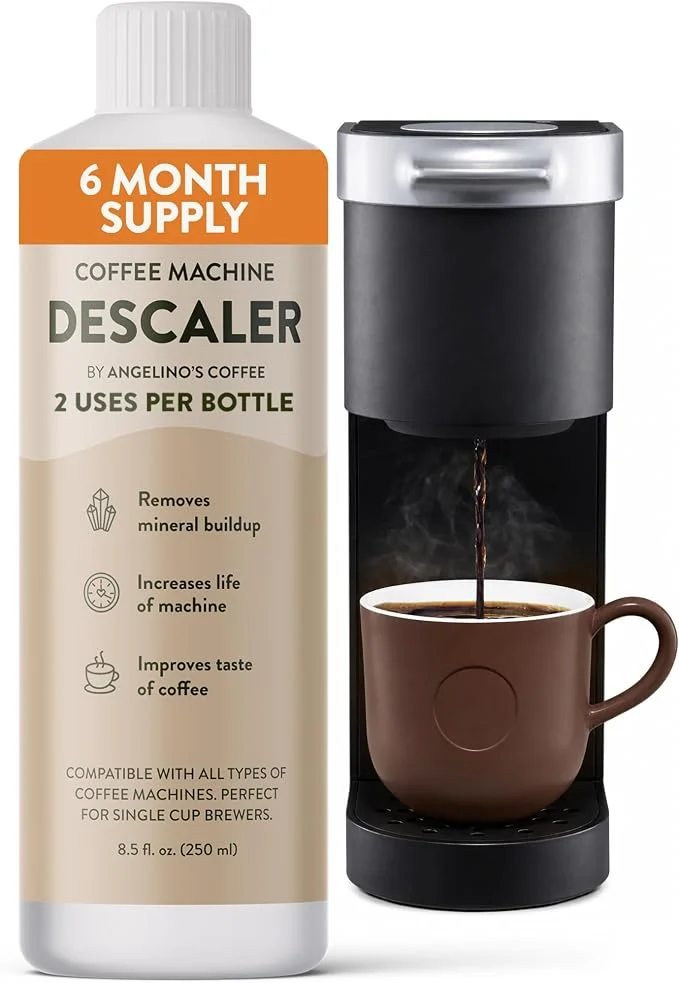
1. Impresa Coffee Maker Descaler (Universal Formula)
The most versatile commercial descaling solution available in 2026. Compatible with every major coffee maker brand including Ninja, Breville, Cuisinart, and Hamilton Beach. Produces thorough descaling results with fewer rinse cycles than vinegar.
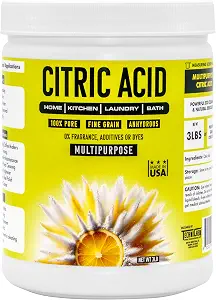
2. Food Grade Citric Acid Powder (1lb Bag)
The most cost-effective professional descaling solution available. One pound provides approximately 20-25 descaling sessions at a fraction of the cost of single-use commercial solutions. My personal choice for regular coffee maker maintenance in my Austin kitchen.
3. OXO Good Grips Coffee Maker Cleaning Brush Set
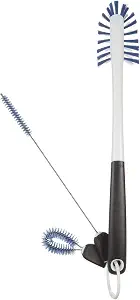
Essential for cleaning spray head holes, filter basket crevices, and carafe interiors that standard cloths cannot reach. The flexible brush heads access every component of your coffee maker for a thorough complete clean.